The renewable solar energy solar power continues to gain traction in all types of projects due to its ability to generate electricity cleanly, efficiently, and sustainably. However, for a solar installation to function well in the long term, simply having good components isn’t enough It is also key to have components in the energy industry that protect, support and integrate the system under demanding conditions.
In this context, the plastic components for solar energy manufactured by rotomoldeo have become a very interesting solution. Their strength, lightness, and adaptability make them especially useful in applications such as the illuminated public solar, the solar streetlights, floating photovoltaics.
The role of components in renewable solar energy
When discussing solar installations, the focus is often entirely on energy generation. However, the performance and durability of a solar solution also depend on its accompanying elements: casings, accommodations, protective pieces, supports or auxiliary structures.
That’s why, the components for solar energy are an essential part of the system. They must be prepared to work outdoors, withstand sun, rain, humidity and temperature changes, and maintain their functionality over time.
You might also be interested in reading about Plastics and metals: manufacturing custom industrial components
This is where the plastic components for solar energy offer a clear advantage. Compared to other heavier or more corrosion-prone options, they allow for the development of strong, lightweight, and low-maintenance parts.
Rotomolding for solar energy: a resistant and versatile solution
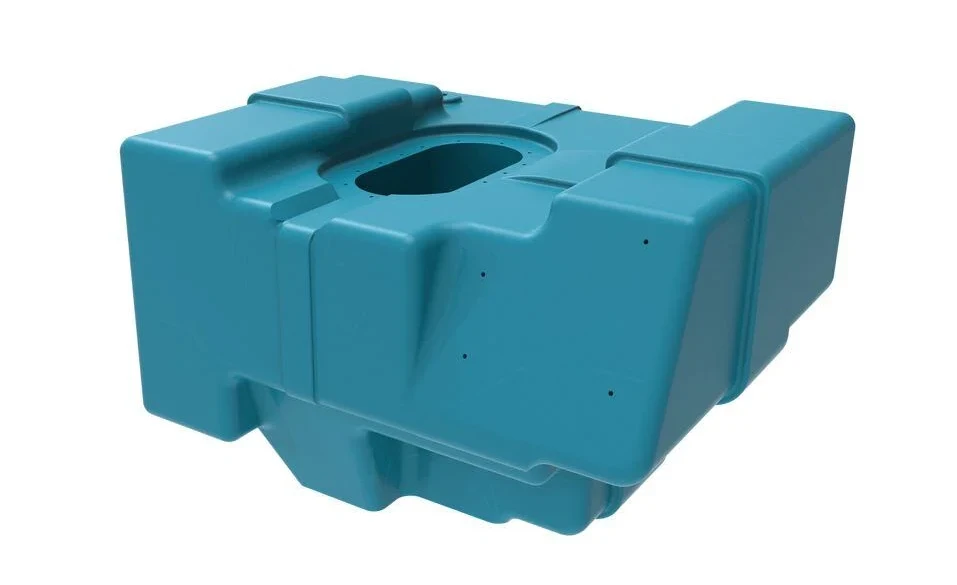
Rotomodel is a manufacturing process that is ideal for producing hollow, robust plastic parts with complex geometries. In the solar sector, this technology allows for the manufacture of components adapted to different uses, both in urban environments and in technical or industrial facilities.
One of the most commonly used materials is rotomolded polyethylene, highly valued for its excellent outdoor performance. Among its advantages are the UV resistance, the weather resistance, and its ability to maintain good performance in demanding environments.
This makes rotomolding for solar energy an ideal option for manufacturing durable parts that protect equipment and reduce maintenance. Furthermore, it offers great design freedom, which is especially useful when each project requires specific measurements, shapes, or solutions.
Also discover other Rotomoulding in the energy industry
Solar public lighting and solar streetlights
One of the clearest applications of this technology is the illuminated public solar. More and more municipalities, housing developments, parks and industrial areas are opting for autonomous lighting systems that reduce energy consumption and simplify installation.
The solar streetlights integrate different elements into a single solution: solar energy collection, storage, electronics, and lighting. For everything to function correctly, it is necessary to have durable components designed for continuous outdoor use.
In this field, components manufactured by rotomolding can be used in housings, technical boxes, battery housings and other auxiliary parts.
Floating photovoltaics and floating structures for solar panels
Another trend of great interest within the renewable solar energy is the floating photovoltaics. This system consists of installing solar panels on water surfaces, such as reservoirs, irrigation ponds or artificial lakes, taking advantage of spaces that would otherwise have no energy use.
In this type of project, the floating structures for solar panels are essential. They must offer buoyancy, stability, and resistance in a particularly demanding environment, with continuous exposure to sun, water, and environmental conditions.
Here, rotational molding shines once again. It allows for the manufacture of hollow, lightweight, and watertight parts, ideal for floating modular systems. The use of rotomolded polyethylene also contributes good resistance against humidity, solar radiation and the elements.
Advantages of plastic components for solar energy
The use of plastic components for solar energy provides concrete benefits in different types of facilities:
- UV resistance, key in pieces continuously exposed to the sun.
- Weather resistance important in the face of rain, wind and temperature changes.
- Lightness which facilitates transport and installation.
- Low maintenance, an advantage in long-term projects.
- Custom design, thanks to the flexibility of rotomolding.
- Good resistance to moisture and corrosion, very useful outdoors and in applications over water.
These qualities explain why rotomolding fits so well into modern solar applications, both in street furniture and in more complex technical solutions.
ABC Rotomolding, expert in the manufacture of plastic components by rotomolding
In a sector where resistance, durability and technical adaptation are increasingly important, having a specialized manufacturer is a great advantage. ABC Rotomoldeo is an expert in the manufacture of plastic components by rotomolding. Developing solutions designed to meet the needs of energy sector and, especially, of the renewable solar energy.
Are you part of the renewable energy sector? Are you considering incorporating rotomolding into the manufacturing of components for your products? Contact our team specialists to help you find the solution that best suits your needs.